
Benefits of Moringa Seeds :Every part of moringa has certain therapeutic and health benefits.
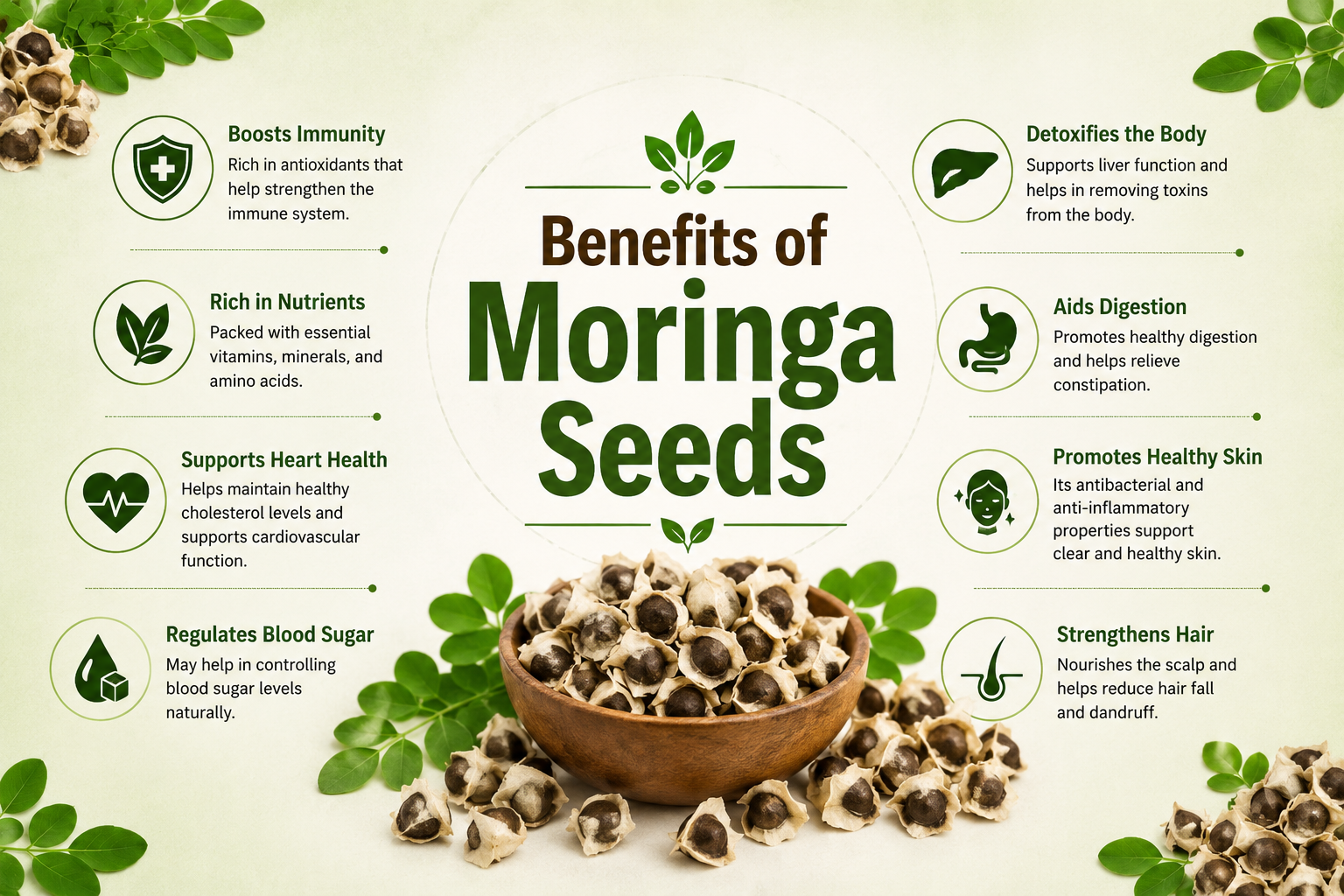
Among these, moringa seeds are rich in macronutrients such as protein, carbohydrates, and lipids, as well as saturated and unsaturated fatty acids.
They provide micronutrients such as vitamin A, potassium, phosphorus, sodium, zinc, magnesium, calcium, and vitamin B1.
Additionally, the seeds are rich in flavonoids, saponins, sterols, and phytates.
They may provide certain nutritional and medicinal benefits to humans.
Oil extracted from moringa seeds may be used in cooking.
Furthermore, it may also be used as a cosmetic, biodiesel, and as a water purifying agent.
Therefore, scientists are now looking to explore the efficacy of moringa seeds for their nutritional and medicinal values.
Moringa Seeds Benefits: Can This Superfood Slow Down Liver Fibrosis?
Liver fibrosis is characterized by the accumulation of extracellular matrix proteins in the liver tissues.
It may be caused by chronic inflammation, injury, obesity, diabetes, excessive alcohol consumption, and hepatitis B and C.
Common symptoms are fatigue, significant weight loss, jaundice, and abdominal swelling.
Managing this condition requires lifestyle modifications, reducing alcohol consumption, and using antiviral medicines for hepatitis B and C.
While standard medicine can manage these conditions, it has certain side effects.
There is a need for an alternative to treat this condition with minimal side effects.
Herbal plants have been used to manage various diseases since ancient times.
Among the herbal plant remedies, moringa is one of the widely distributed and well-known plants, which may be an alternative to manage and prevent liver fibrosis.
Alaaeldin A. Hamza conducted a study to evaluate the efficacy of Moringa oleifera seed extract in the management of liver fibrosis in rats.
Both prophylactic and therapeutic experimental studies were performed.
The researcher randomly selected an appropriate number of albino rats and divided them into control and experimental groups.
Liver fibrosis was induced in rats by the administration of 20% carbon tetrachloride (1 ml/kg body weight) twice weekly for 8 weeks.
Following the induction of liver fibrosis, the seed extract was administered to manage the condition.
Additionally, in the prophylactic studies, rats separately received moringa and silymarin orally in a specified dose prior to CCL4 doses.
The physicochemical and biochemical assays revealed that the seed extract can be used both as a preventive treatment and in the management of liver fibrosis.
Moringa oleifera Seeds: A Green Solution to Decreasing Cyanobacteria
Cyanobacteria, often called blue-green algae, are unicellular prokaryotic organisms.
Water resources, including ponds, lakes, and drinking water reservoirs, provide the necessary nutrients for cyanobacteria.
Therefore, these organisms can grow in various water resources.
Excessive blue-green algae growth is harmful to aquatic life, humans, and the environment.
It creates health problems. Today, there is a significant increase in water demand, and to fulfill this need, water resources must be free from impurities, toxins, and pathogenic microorganisms.
Traditional water purification processes require chemicals and costly equipment, which are often unaffordable for developing countries.
Therefore, there is a need for a cost-effective and easily available purification process.
Crushed Moringa oleifera seeds may be used to purify water naturally.
Miquel Lürling & Wendy Beekman conducted a study to determine the effect of Moringa oleifera seeds on the growth of the cyanobacterium as well as on water clarification and purification.
The researchers procured the cyanobacterium Microcystis aeruginosa NIVA-CYA 43.
It was grown in nutritional culture media.
They performed an experiment on the effect of crushed Moringa oleifera seeds on the growth of M. aeruginosa and on cultured blooms of M. aeruginosa.
For the study, varied concentrations of seed filtrate were used.
The researchers demonstrated that higher concentrations of seed extract (20-120 mg/L) led to a decrease in the cyanobacteria populations.
These findings suggest that Moringa oleifera seeds may have the potential to remove cyanobacteria from water resources.
Exploring Moringa Oleifera Seeds Benefits in Countering Cerebral and Ocular Toxicity
External chemicals, conventional drugs, and surgical devices may cause ocular toxicity.
Ocualar toxicity is characterized by structural and functional changes in the eye.
Common symptoms include redness, pain, blurred vision, and light sensitivity.
Although conventional medicines are available for treatment and management, they may not be accessible to everyone.
Herbal medicines, however, may be available and accessible to most people and often cause minimal side effects.
Ibtesam S. Alanazi and colleagues conducted the study on the efficacy of Moringa oleifera seed extract against cerebral and ocular toxicity induced by administration of chlorpyrifos.
The researchers randomly selected 40 adult Wistar mice and divided them into five groups.
The control group received only saline, while the experimental groups received fixed amounts of chlorpyrifos and varied amounts of seed extract.
The assessment of biochemical and physicochemical parameters revealed the efficacy of moringa.
These findings suggest that Moringa oleifera seed extract has potential for managing cerebral and ocular toxicity.
Ulcerative Colitis and Gut Health: The Potential Benefits of Moringa Oleifera Seeds
Ulcerative colitis is characterized by inflammation and ulcers in the inner lining of the colon and rectum.
It is primarily an autoimmune disease but may be triggered by stress, viral or bacterial infections, or improper dietary habits.
Common symptoms include abdominal pain, cramps, significant weight loss, bloody stool with mucus and pus, and fatigue.
The condition may be managed by changing dietary habits, administration of standard medicines, and, if necessary, surgical intervention.
Indigenous plants, such as moringa, may help to manage and prevent the condition alongside conventional therapy.
Youjin Kim and colleagues conducted a study to evaluate isothiocyanate-enriched moringa seed extract in the management of ulcerative colitis.
The researchers randomly selected 32 male C57BL/6J mice aged 7 weeks and divided them into control and experimental groups.
They studied dextran sulphate sodium-induced acute- and chronic ulcerative colitis in mice.
The experimental groups separately received doses of moringa seed extract and amino-salicylic acid.
The assessment of biochemical and physicochemical parameters evaluated the efficacy of seed extract.
These findings suggest that Moringa oleifera extract has potential for managing ulcerative colitis.
Moringa Tree Seeds Benefits: Fighting Oxidative Stress and Boosting Running Performance in Athletes
There is often a temporary increase in free radical or reactive oxygen species concentration while performing exercise.
This condition leads to tissue damage and fatigue.
Athletes may use herbal supplements to increase their stamina and reduce exercise-induced negative effects.
Nasser Abouzeid and colleagues conducted a study to evaluate the effect of Moringa oleifera seed on oxidative stress and running performance.
The researchers randomly selected 26 male runners and divided them into two groups, a control group and an experimental group.
The control group received 300 ml of orange juice after exercise.
The experimental group received 300 ml of orange juice mixed with moringa seed powder three times a week after exercise for approximately eight weeks.
The assessment of physiological and performance parameters demonstrated the efficacy of Moringa oleifera seed powder.
The findings suggest that Moringa oleifera seed powder has the potential to reduce oxidative stress and enhance the running performance of athletes.
References:
1. Saa RW, Fombang EN, Ndjantou EB, Njintang NY. Treatments and uses of Moringa oleifera seeds in human nutrition: A review. Food Sci Nutr. 2019;7:1911-1919.
2. Leone A, Spada A, Battezzati A, Schiraldi A, Aristil J, Bertoli S. Moringa oleifera seeds and oil: characteristics and uses for human health. Int. J. Mol. Sci. 2016; 17(12): 2141.Read more
3. Hamza AA. Ameliorative effects of Moringa oleifera Lam seed extract on liver fibrosis in rats. Food Chem Toxicol. 2010;48 (1):345–355.
4. Lürling M, Beekman W. Anti-cyanobacterial activity of Moringa oleifera seeds. J Appl Phycol. 2010; 22(4):503–510.
5. Alanazi IS, Altyar AE, Zaazouee MS, Elshanbary AA, Abdel-Fatta A-FM, Kamel M, et al. Effect of moringa seed extract in chlorpyrifos-induced cerebral and ocular toxicity in mice. Front. Vet. Sci.2024;11:1381428.
6. Kim Y, Wu AG, Jaja-Chimedza A, Graf BL, Waterman C, Verzi MP, et al. Isothiocyanate-enriched moringa seed extract alleviate ulcerative colitis symptoms in mice. PLoS ONE. 2017;12(9):e0184709.
7. Abouzeid, N, Saad M, Ungurean B-C, Larion A, Zajac A, Kobacy W, et al. The effects of moringa seed supplements on oxidative stress and 10 km running performance. J Hum Sport Exerc. 2025;20(3):1012-1019.
FAQ
Moringa seeds provide nutrients like protein, vitamin C, calcium, and potassium.
Furthermore, they are rich in fatty acids, including oleic acid, linolenic acid, palmitoleic acid, stearic acid, and palmitic acid.
They also possess bioactive compounds such as glucosinolates, isothiocyanates, flavonoids, and polyphenols.
All these compounds together may have distinct health benefits, such as improving blood sugar, digestion, heart health, and immunity.
They may also possess anti-inflammatory and antioxidant activity.
Moringa seeds provide fiber along with antioxidant and anti-inflammatory compounds that work together to support digestive health.
A nutrient-rich part of the moringa tree fo
Moringa seeds are rich in nutrients such as vitamins A, C, E, and B, as well as minerals like calcium, potassium, and iron.
They also contain essential amino acids, proteins, and fatty acids.
Both moringa leaves and seeds possess distinct nutrients and bioactive components.
They also possess varying concentrations of these compounds.
Therefore, we cannot say that one is better than the other. Both have distinct nutritional and medicinal benefits and side effects.
Research conducted on animals and limited clinical trials suggest that bioactive compounds in moringa may help reduce blood sugar levels.
Preclinical studies suggest that antioxidant and anti-inflammatory compounds present in moringa may support liver health.
Antioxidants help to prevent and manage oxidative stress, while anti-inflammatory agents help to reduce inflammatory conditions.
Additionally, moringa seeds possess compounds that normalize liver enzyme levels.
Preclinical research studies suggest that moringa seeds may have a role in the management of joint pain and arthritis.
These cannot be used as an alternative to conventional medicines but can be used as supportive treatment for it.
Yes, nutrients and bioactive compounds in moringa seeds may improve immune system function.
Moringa seeds can be consumed in either raw or processed forms.
Raw seeds can be eaten after removing their hard outer shells.
Alternatively, the seeds can be boiled for about 10 minutes before consumption.
Moringa seed powder can be easily incorporated into curries, smoothies, teas, and soups.
Yes, moringa seeds’ bioactive compounds may interact with medicines like antidiabetics, antihypertensives, antithyroid, and anticholesteremics.
Therefore, always consult a physician before initiating moringa seed consumption in your daily diet as a supplement.
Moringa seeds possess bioactive compounds that may be harmful to a fetus. Therefore, pregnant women must not consume moringa seeds during pregnancy.
There is no universal dosage for moringa seeds.
It may vary from person to person, depending on factors such as age, sex, and presence of other diseases.
Yes, bioactive compounds present in moringa may play a role in enhancing metabolism, reducing fat storage in the body, and decreasing blood sugar levels.
Therefore, it may be possible to reduce weight by consuming moringa.
Preclinical and clinical research studies reveal that moringa seeds contain bioactive compounds that improve neurotransmitter levels, oxidative stress, and inflammation.
Furthermore, certain nutrients in moringa may normalize sleep cycles.
For more science-backed health guide and educational resources visit us at https://buymoringapowder.com.
The antioxidant vitamin E and fatty acids in moringa seeds may help nourish skin, protect the skin barrier, and act as an anti-irritant agent.

Mr.Piyush D Sadar ,Mpharma B pharma ,Pharma Blog Writer
Medical Disclaimer: This article is for educational purposes only and should not replace professional medical advice. Always consult your obstetrician or healthcare provider before using moringa or any herbal supplement during pregnancy.
Read More :Moringa Benefits for Male