
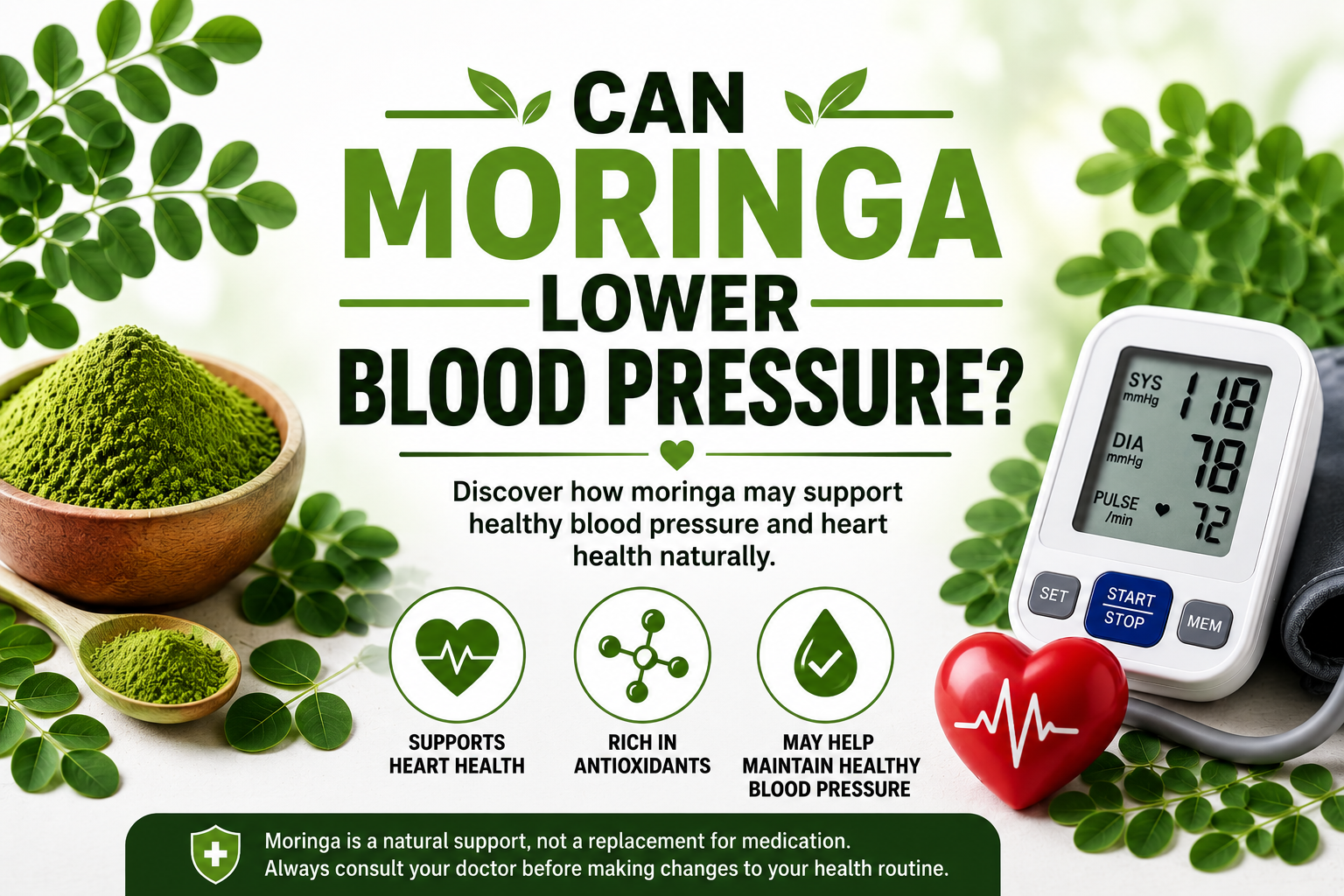
Can Moringa Lower Blood Pressure ? Hypertension is a disorder characterized by an increase in arterial blood pressure to 140/90 mmHg or higher on multiple readings. what is moringa?
It is a condition that commonly occurs in individuals aged 30 and above, worldwide, in both developed and developing countries.
The condition is responsible for about 8 to 10 million deaths annually worldwide.
An individual suffering from hypertension can have common symptoms, including a severe headache, nausea, vomiting, irregular heart rhythm, anxiety, and blurred vision.
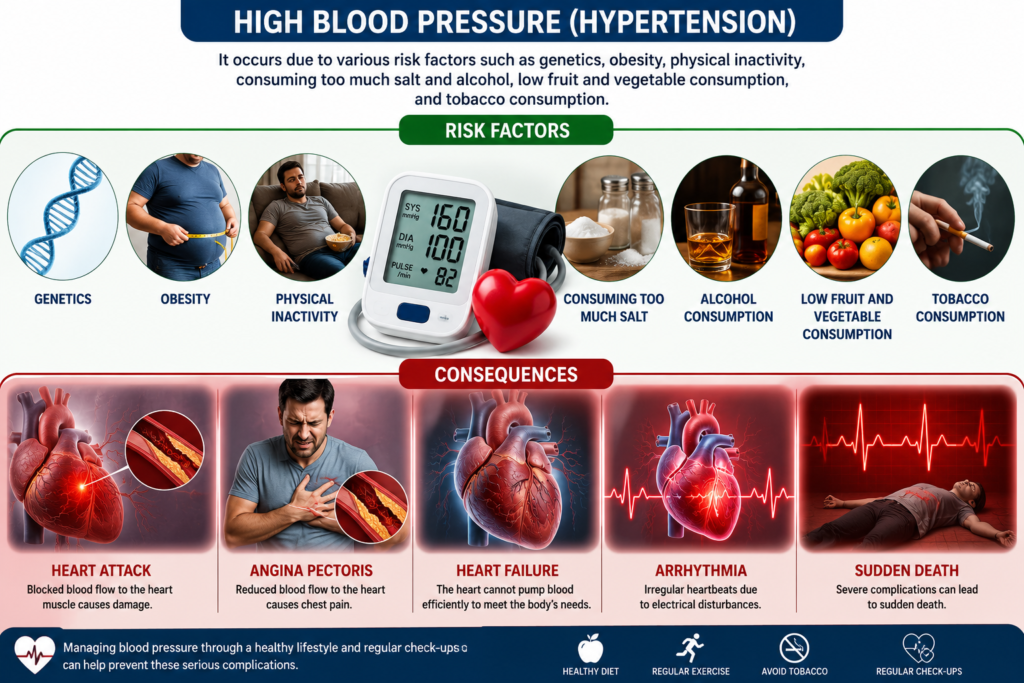
It occurs due to various risk factors such as genetics, obesity, physical inactivity, consuming too much salt and alcohol, low fruit and vegetable consumption, and tobacco consumption.
Its consequences include heart attack, angina pectoris, heart failure, arrhythmia, and sudden death.
To manage the condition, individuals need to change their lifestyle and dietary habits and increase physical activities. If needed, use conventional medications to combat conditions.
Although a number of conventional medications are available to manage hypertension, they have several side effects along with benefits.
Therefore, extensive research has been conducted on alternative systems of medicine. Among the remedies available in the Ayurvedic system,
Moringa oleifera can be used for high blood pressure.
Ayurvedic medications have few side effects.
Moringa oleifera leaves have bioactive compounds such as flavonoids, tannins, and saponins, and these compounds reduce blood pressure by various mechanisms, such as vasodilation.
To manage the condition, individuals need to change their lifestyle and dietary habits and increase physical activities.
If needed, use conventional medications to combat conditions.
Although a number of conventional medications are available to manage hypertension, they have several side effects along with benefits.
Therefore, extensive research has been conducted on alternative systems of medicine.
Among the remedies available in the Ayurvedic system, Moringa oleifera can be used for high blood pressure.
Ayurvedic medications have few side effects. Moringa oleifera leaves have bioactive compounds such as flavonoids, tannins, and saponins, and these compounds reduce blood pressure by various mechanisms, such as vasodilation
Moringa for high blood pressure: What the research shows
Can moringa lower blood pressure? Extensive research has been performed to determine this. Some of these studies are summarized below.
Can moringa lower blood pressure.: What research says
Fitri Dian Kurniati and co-researchers
conducted a study of Moringa oleifera leaf decoction on individuals with mild to moderate hypertension.
The researchers employed a pre-test and post-test model.
For the study, researchers randomly selected 20 elderly individuals, both male and female aged 60 and above.
Before administering moringa oleifera decoction, initial blood pressure was measured in all volunteers.
Fresh moringa decoction in specified amounts was administered to volunteers for approximately 7 days.
The effect of consumption of the decoction was evaluated after 7 days.
The researchers concluded that administration of moringa decoction effectively reduced blood pressure in volunteers.
Individuals aged between 60 and 75 showed a greater response than those aged above 75.
Does moringa lower blood pressure: Effects on Normal vs. High Blood pressure
Kumolosasi E et al.
conducted a study of Moringa oleifera parts extract on spontaneously hypertensive rats.
For the study, researchers extracted the bioactive components from the leaves, pods, bark, stem, and seeds of moringa using aqueous and ethanolic solvents.
Approximately 60 rats were used and divided into experimental and control groups.
To determine effectiveness, all moringa part extracts were administered at varying doses to spontaneously hypertensive rats.
The researchers found that extracts of all moringa parts, except the aqueous stem extract, effectively decreased systolic and diastolic blood pressure.
Furthermore, the extracts did not cause a decrease in blood pressure in normotensive rats.
The efficacy was also comparable to that of standard conventional medications such as perindopril and irbesartan.
Theantihypertensive effect of the extract is attributed to the various bioactive components present in the Moringa oleifera.
Moringa and High Blood Pressure: What Does the Science Say?
S.Y. Dangi and colleagues conducted a study on the efficacy of Moringa oleifera leaves for hypertension.
For the investigation, researchers used an aqueous leaf extract.
The alkaloidal content of the extract was confirmed by phytochemical screening.
The study was conducted on isolated frog hearts and guinea pig taenia coli.
Varying concentrations of the extract were administered, and its effects were studied.
Researchers found that total alkaloidal salts extracted from dried Moringa oleifera leaves had a negative ionotropic effect.
The efficacy of the extract may be attributed to the presence of calcium antagonists.
What does moringa do in managing drug induced hypertension
Gholamreza Asghari and colleagues
investigated the efficacy of a hydroalcoholic extract of Moringa peregrina on dexamethasone-induced hypertensive rats.
For the study, a specified number of male Wistar rats were used and divided into experimental and control groups.
Dexamethasone was administered to enhance blood pressure.
Varying concentrations of the moringa extract and captopril were administered.
The researchers investigated both preventive and reversal studies.
From the study, they found that moringa extract at a dose of 400 mg/kg body weight prevented hypertension effectively when administered before dexamethasone.
It was unable to reverse the hypertensive condition induced by dexamethasone.
Kang-Hua Chen and co-researchers
investigated the efficacy of Moringa oleifera extract on monocrotaline-induced pulmonary hypertension in rats.
Pulmonary hypertension is a disorder in which pulmonary arterial blood pressure increases.
The researchers used 6-week-old Wistar male rats, which were divided into control and experimental groups. MCT was administered to rats to induce pulmonary arterial hypertension.
The researchers administered Moringa oleifera extract after three weeks of MCT treatment.
It was administered in varying doses to evaluate its efficacy.
The researchers concluded that the Moringa oleifera extract can be used in the management of pulmonary hypertension induced by monocrotaline.
It possesses vasodilator and antioxidant activities.
Faq:-
Yes, moringa has various bioactive compounds such as alkaloids, tannins, saponins, and glycosides in its parts.
These compounds act distinctly to regulate bodily functions.
Furthermore, preliminary animal and human studies have demonstrated the antihypertensive activity of Moringa oleifera.
Therefore, we can say that moringa can be utilized to manage hypertension, but care must be taken, and one should always consult a physician before consumption and possible interaction with conventional medication if one already has hypertension.
Either consume moringa leaf tea or start with consuming approximately ½ to 1 tablespoon of powder in warm water, soup, smoothies, or salads. You can also use fresh leaves in cooking. Although moringa consumption is beneficial for health, always consult your physician before consuming it if you already have certain medical conditions. Moringa can be used as a complement to standard conventional medications and not as a replacement for them.
Moringa powder and moringa capsules both are effective in hypertension. When compared with capsules, we can adjust the dose of powder as per requirement, but in capsules, a definite quantity of moringa powder, like 500 mg or 1000 mg, has to be consumed. The capsule dosage form is utilized for masking taste and protecting the drug and other excipients from direct atmospheric impact. Capsules also enhance patient compliance.
When compared with tablets and capsules, moringa powder offers better bioavailability. It can be absorbed by the body in less time than in tablet and capsule form. There needs to be close medical monitoring of hypertension. A moringa powder dose can be adjusted according to individual requirements. Consuming it in its raw, powder form makes sure that the bioactive components remain intact. Besides that, moringa powder and leaves can be consumed by simply adding them into various daily meals. Therefore, we can say that consumption of moringa leaves and powder is better than capsules and tablets for high blood pressure.
Green tea and moringa both have different mechanisms of action to reduce blood pressure. While green tea primarily provides catechins, moringa possesses flavonoids, potassium, magnesium, and natural ACE inhibitors, which help in the management and prevention of high blood pressure.
Yes, scientific studies demonstrate that the efficacy of Moringa oleifera can be enhanced by regular exercise alongside daily moringa supplementation.
Blood thinner medications prevent blood clotting and improve blood flow. Moringa possesses vitamin K, which plays a role in the blood clotting process. Therefore, consuming moringa alongside these medications can reduce the effectiveness of the treatment.
When consumed in adequate quantities, moringa has minimal side effects. However, when consumed in excessive quantities, it may cause a sudden drop in blood pressure.
There is no universally recommended dose of moringa for hypertension. It depends on various physical and biochemical parameters and certain other factors related to a particular individual. The recommended dose varies from person to person, so it is highly recommended to consult a healthcare professional for dosage.
Moringa does not have an immediate antihypertensive effect. It requires adequate time and consistent use to manage high blood pressure effectively.
There are numerous scientific research animal studies and a few clinical trials that demonstrate the efficacy of moringa to lower blood pressure. Moringa oleifera possesses several bioactive compounds that play an important role in the management of hypertension. These compounds work by distinct mechanisms to reduce elevated blood pressure. It can be utilized as a complementary intervention alongside standard medications. For more science-backed health guides and educational resources, visit us at https://buymoringapowder.com.
Moringa oleifera possesses numerous natural bioactive compounds that act as antihypertensive and antidiabetic agents. Consuming it in moderate quantities has beneficial effects; however, excessive consumption may lead to severe hypotension and hypoglycemia. Furthermore, when taking it alongside conventional medicines, always consult a physician.
Moringa leaves and pods possess nutrients such as potassium, calcium, and magnesium, which are essential for normal heart functioning. Therefore, moringa pods and leaves can be effective in the management of high blood pressure.
There are several key health benefits to consuming moringa supplements rather than in raw leaves or powder. Firstly, when compared to the raw leaf or powder, supplements provide a precise dosage. Therefore, an individual can consume a predetermined dose daily. Secondly, supplements are often prepared to enhance the nutrient absorption and bioavailability of moringa. These supplements are available in various forms, such as tablets, capsules, and can be conveniently used by people of all age groups after consulting a healthcare professional.
References:-
1. Kurniati FD, Suib, Kusumasari RV. Effectiveness of daun kelor (Moringa oleifera leaf) decoction on lowering blood pressure in the elderly. Pharmacy Sciences and Health Practice. 2025 Jan-Jun;1(1)::1-9.
2. Kumolosasi E, Wei CC, Abdullah AZ, Manap NSA, Lee WL, Yusuf MH, et al. Antihypertensive Activities of Standardised Moringa oleifera Lam. (Merunggai) Extracts in Spontaneously Hypertensive Rats. Sains Malaysiana. 2021 Mar;50(3):769-778.
3. Dangi SY, Jolly CI, Narayanan S. Antihypertensive Activity of the Total Alkaloids from the Leaves of Moringa oleifera. Pharm Biol. 2002;40(2):144-8.
4. Safaeian L, Asghari G, Javanmard SH, Heidarinejad A. The effect of hydroalcoholic extract from the leaves of Moringa peregrina (Forssk.) Fiori. on blood pressure and oxidative status in dexamethasone-induced hypertensive rats. Adv Biomed Res. 2015;4:101.
5. Chen KH, Chen YJ, Yang CH, Liu KW, Chang JL, Pan SF, Lin TB, Chen MJ. Attenuation of the extract of Moringa oleifera on monocrotaline-induced pulmonary hypertension in rats. Chin J Physiol. 2012;55(1):18-24.
6. https://www.who.int/news-room/fact-sheets/detail/hypertension
Auther Name:-