
Table of Contents
Introduction
What Is Moringa ? Do you know about the plant whose all parts, including bark, roots, flowers, fruits, and seeds, have been used for a long time for their numerous nutritional and medicinal values? Very few plant species offer therapeutic and nutritional value across all of their parts. This is because, a bioactive compound that imparts a therapeutic effect is concentrated to a single specific part of the plant. The rest of the parts do not have biologically active compounds to show any kind of therapeutic effect or activity. Considering the nutritional aspect, animal-origin food is richer in macronutrients like protein, carbohydrates, and fats as well as micronutrients such as vitamin B12, calcium, and vitamin D. However, they also have all essential amino acids. Nutrients play a role in body muscle development, a healthy nervous system, normal body function, and the development of strong bones. It is difficult to obtain a high amount of nutrients from a single plant-based food. For example, there are nine essential amino acids that are present completely in only some plant-based foods. In case of vegan people, problems arise in fulfilling their nutritional needs because some nutrients are present in significant amounts only in food derived from animals, and for individuals that entirely depend on such food to fulfill their nutritional necessity, moringa is a good option to obtain adequate amounts of nutrients. Moringa has a significant concentration of nutrients as compared to other plant-based foods. It is so rich in nutrients that it has a higher amount of iron than spinach, a higher quantity of beta carotene than carrots, and a very much higher quantity of calcium than milk. It is also rich in macronutrients that include protein, fat, and carbohydrate, and all nine essential amino acids are present in it. Moringa also has numerous bioactive compounds that play a role in the management and prevention of various illnesses. Because moringa has a number of nutritional and health benefits, it is also called the tree of life. From ancient times, moringa has been an important part of Ayurvedic medicine, where all parts of moringa that include leaves, roots, bark, pods, and flowers are utilized for treatment and management of various illness conditions. For a long time, moringa has been part of medicinal use in the treatment of diseases in different communities around the world. Although it has been utilized as medicine for a long time, recent scientific research studies have enlightened the nutritional and health benefits of moringa. So the question arises: “why should moringa not be part of a day-to-day routine”? Here we have mentioned various nutritional and health benefits of moringa that encourage individuals to make moringa and moringa products as a routine part of their day-to-day life.
A) What is Moringa?
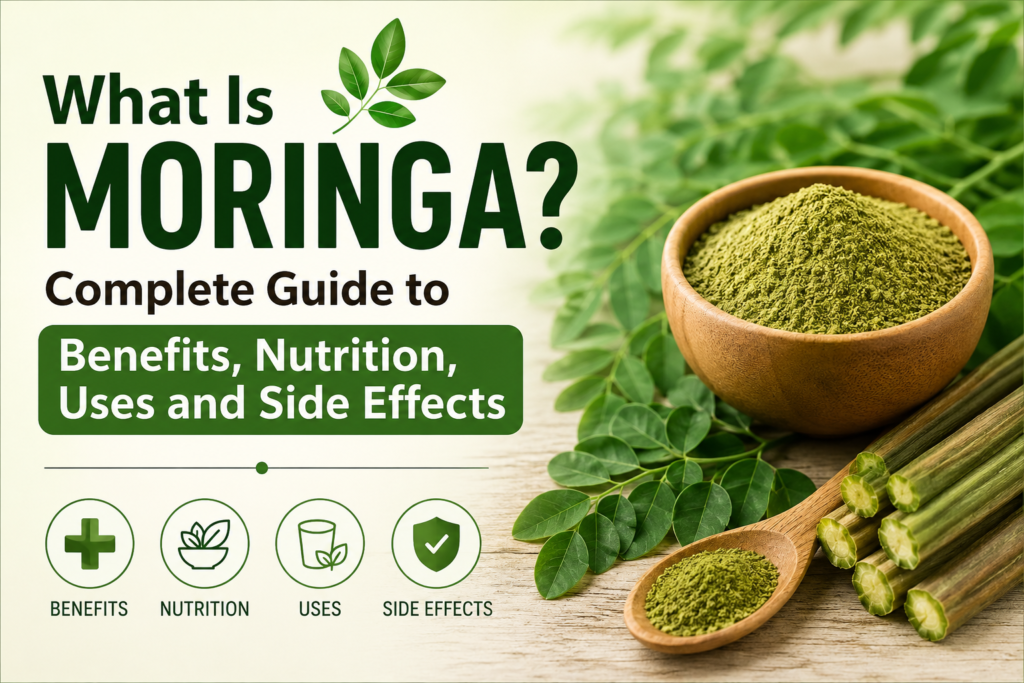
Since prehistoric times, Moringa has been used as both food and medicine. It is often called the “miracle tree” because its pods, roots, flowers, leaves, stem, and bark offer medicinal benefits in the prevention and treatment of diseases. Furthermore, Moringa is enriched with macro- and micronutrients in higher concentrations than many other plants. Because these nutrients have both medicinal and nutritive value, moringa is also known as a functional food. Although it has originated in northern India, today it is found in different parts of the world, whether in tropical or subtropical regions. It is a drought-tolerant plant that can survive in areas with low rainfall. Moringa has the botanical name Moringa oleifera. In different geographical locations, the Moringa plant is known by different common names. Here are the various common names for the Moringa plant in the following table.What Moringa Leaves Good For
Table no.1 – Moringa Oleifera: Regional Common Names”
| S.No. | Language/Region | Moringa common name |
| 1. | English | Drumstick tree, Horseradish tree, Ben oil tree |
| 2. | Hindi | Sahjan, Munaga, Sujna, Senjan, Shobhanjan. sohanjna |
| 3. | Marathi | Shevga |
| 4. | Tamil | Mrungai |
| 5. | Malayalam | Muringa, Murinna |
| 6. | Sanskrit | Shigru, Subhanjana, Aksheev |
| 7. | Philippines | Malunggay |
| 8. | Indonesia | kelor |
| 9. | Spanish | Marango |
| 10 | Gujrati | Saragvo |
| 11 | Bengali | Sajna |
| 12. | kanada | Nugge |
| 13. | Oriya | Sajana |
| 14. | Panjabi | Surajana |
| 15. | Assamese | Sojina |
| 16 | French | Benzolive tree |
| 17 | Portuguese | Marungo |
| 18 | Thialand | Marum |
B) Moringa advantages
Table 2. Moringa advantages
| S.No. | Advantage |
| 1. | Moringa is an exceptional example of a plant where every single part, including the flower, fruit, seed, bark, and root, all possess both nutritional and medicinal properties. |
| 2. | Moringa contains high amounts of essential nutrients, including calcium, iron, and vitamin A; therefore, it acts as an excellent dietary supplement for vegetarians when compared to typical plant-based foods. |
| 3. | Because the plant possesses more than 100 bioactive molecules, moringa can be utilized to manage several diseases. |
| 4. | Moringa contains all nine essential amino acids, fulfilling the protein requirements for vegans. |
| 5. | Moringa can be consumed by both adults and children for its nutritional and medicinal properties. |
| 6. | Moringa can be consumed in raw form, such as its leaves and pods. All parts of the plant have culinary applications, while leaf powder, bioactive compounds, and oil extracted from it have therapeutic applications in Ayurvedic medicine. |
| 7. | Moringa consumption is valued in geographical areas where adequate food is not available to fulfill daily nutritional needs. |
| 8. | While vegetables lose significant nutrient content after cooking, moringa leaves retain it, whether in fresh or dried form. Similarly, moringa powder also retains benefits after storage for a long time. |
| 9. | Moringa and its formulations have demonstrated effectiveness in treating acute and chronic disease conditions. |
| 10. | Besides therapeutic applications, moringa can also be applied in cosmetic preparations. |
| 11. | Daily consumption of an adequate quantity of moringa has a number of nutritional and health benefits in adults and children as well. |
| 12. | Moringa is beneficial in developing countries where the daily diet of the people lacks essential vitamins and minerals. |
| 13. | As an Ayurvedic formulation, moringa is generally safe and well tolerated when taken in the recommended dosage. |
| 14. | Gram-for-gram, moringa has higher amounts of Vitamin C than citrus fruits such as oranges. Fresh moringa leaves possess around 200 to 270 mg of Vitamin C per 100 g, while oranges possess 50 to 70 mg per 100 g. |
| 15. | Gram-for-gram, moringa has significant amounts of provitamin A. In fact, dried moringa leaves possess up to 10 times the beta-carotene of fresh carrots. |
| 16. | Dried moringa powder is a rich, plant-based source of calcium, providing a significantly higher amount than milk. It contains approximately 1000 to 2000 mg calcium per 100 g, while whole milk contains 120 mg per 100 g. |
| 17. | Gram-for-gram, dried moringa powder is a rich, plant-based source of iron, providing a significantly higher amount than spinach does. |
| 18. | Moringa is rich in several micro- and macronutrients that are essential for healthy and normal body functioning. |
| 19. | Including moringa in a daily diet can increase energy levels and immune function in individuals. Moringa is useful in skin conditions also |
C) Moringa nutritional value –
The whole moringa plant — including the leaves, fruits, seeds, flowers, pods, and roots — is utilized in various types of food preparation. The pods, widely known as drumsticks, are a popular ingredient in soups, vegetable curries, and sambar throughout southern and western India. Moringa leaves are commonly added to dal and stir-fried recipes, while leaf powder is incorporated into smoothies. Although the flowers, seeds, seed oil, and roots of moringa have also found some application in culinary preparation, the leaves and pods remain the most routinely consumed parts. All parts of the moringa plant are rich in macronutrients such as protein, carbohydrates, and fats, as well as micronutrients including various minerals and vitamins, which help fulfill the body’s daily nutritional requirements. The following table details various nutrients present in moringa and their roles in the human body.
Table no. 3- A Comprehensive List of Nutrients Found in Moringa and Their Physiological Roles
| S. No. | Moringa nutrients | Role of component |
| 1. | Protein | Enzymes that play a role in various metabolic reactions are proteins. Protein plays a vital role in tissue building and repairing.Protein plays a role in pH balance.Protein also plays a role in fluid balance. Proteins are vital for a healthy immune system.Protein is a source of energy. |
| 2. | Fats | Fats act as a reserve source of energy. Fats play a crucial role in protecting vital organs such as the heart, kidney, and liver.Fats that are present in skin act as insulators to protect from extreme outer environmental conditions.Fats are vital for reproductive health. Fats are vital for synthesis and regulation of hormones.Fats also play a role in the transport of fat-soluble nutrients and their absorption. |
| 3. | Fiber | Fiber plays a vital role in normal gut functioning.Fibers are crucial for healthy microbial flora, which is present in the gut. |
| 4. | Carbohydrate | Carbohydrates are a routine source of energy to fulfill daily requirements. Carbohydrates play a crucial role in building macromolecules.Carbohydrates play a vital role in lipid metabolism. Carbohydrates play a vital role in hormone regulation.Carbohydrates are also essential for normal digestive function. Carbohydrates are necessary for a healthy immune system. |
| 5. | Vitamin A | Vitamin A plays a crucial role in healthy eyesight. Vitamin A has a vital role in the formation of teeth, skin, skeletal tissue, soft tissue, and mucous membranes. Vitamin A plays a role in normal immune system functioning. |
| 6. | Mg (magnesium) | Magnesium plays a vital role in normal nerve and muscle function. Magnesium plays a vital role in a healthy immune system. Magnesium is one of the essential components of various biochemical reactions that take place in the body.Magnesium plays a crucial role in forming healthy and strong bone formation. Magnesium plays a crucial role in the production of energy and protein. |
| 7. | Ca (calcium) | Calcium is essential for healthy bones. |
| 8. | P (phosphorus) | Phosphorus is crucial for the formation of normal and healthy bones and teeth.Phosphorus has a vital role in the synthesis of protein. Phosphorus is crucial for the synthesis of phospholipids, which are an important part of the structure of cell membranes. |
| 9. | K (Potassium) | Vitamin k is necessary for the production of proteins that are involved in blood clotting. |
| 10. | Cu (Copper) | Copper acts as a coenzyme in biochemical reactions.Copper plays a crucial role in energy production.Copper plays a vital role in iron metabolism. Copper plays a crucial role in neurotransmitter synthesis. |
| 11. | Fe (iron) | Iron plays a crucial role in the formation of RBC.Iron has a vital role in the formation of hemoglobin that transports oxygen throughout the body. |
| 12. | S (Sulfur) | Sulfur is necessary for the regulation of gene expression.Sulfur is vital for the formation and repairing of DNA.Sulfur is crucial for the synthesis of proteins. |
| 13. | Vitamin B1 (Thiamine) | Vitamin B1 has a crucial role in carbohydrate metabolism.Vitamin B1 plays a vital role in the contraction of muscles.Vitamin B1 plays a vital role in the conduction of nerve signals.Vitamin B1 is essential for the normal functioning of various vital organs such as the heart, stomach, brain, and muscles. |
| 14. | Vitamin B2 (Riboflavin) | Vitamin B2 plays a crucial role in carbohydrate, fat, and protein metabolism.Vitamin B2 plays a crucial role in the formation of ATP. |
| 15. | VitaminB3 (Niacin) | Vitamin B3 plays a crucial role in the metabolism of various macronutrients.Vitamin B3 is essential for normal heart functioning. |
| 16. | Vitamin C | Vitamin C plays a crucial role in wound recovery.Vitamin C has a vital role in the absorption of Iron.Vitamin C acts as an antioxidant that plays a crucial role in the prevention of damage by free radicalsVitamin C is crucial for the formation of a protein called “collagen.”Vitamin C has a crucial role in the health and maintenance of skin, tendon, ligament, cartilage, bone, teeth, and blood vessels. |
| 17. | Vitamin E | Vitamin E is essential for a healthy immune system.Vitamin E is essential for proper gene expression.Vitamin E is vital for normal cellular signaling.Vitamin E has a crucial role in the prevention of damage by free radicals. |
| 18. | Amino acid – Essential amino acid -histidine, Leucine, Isoleucine, lysine, Methionine, Phenylalanine, threonine, Tryptophan, and valine Nonessential amino acid- Glutamic acid, Aspartic acid, Arginine, Alanine, Glycine, Proline, Serine, Tyrosine, and Cysteine. | Essential amino acids are the chemical constituents that cannot be synthesize by the human body and must be obtained through diet.The Moringa plant have all 9 essential amino acids in it that are necessary for humans to obtain from their diet.Essential and Nonessential amino acids are necessary for synthesis of hormones.Essential and nonessential amino acids are crucial for a healthy immune system.Essential and nonessential amino acids are crucial for the production of neuro transmitters. |
| 19.. | Fatty acid – Oleic acid, Linoleic acid, Palmitic acid, and linolenic acid | Fatty acids are a source of energy.Fatty acids are crucial for the formation of cell membranes.Fatty acids are crucial for normal cellular signaling. |
D) Moringa benefits
Since prehistoric times, moringa has been used as food as well as in traditional Ayurvedic medicine for the treatment of different ailments. For generations, distinct parts of the moringa tree have been used in the treatment and prevention of ailments, targeting the digestive system, respiratory system, cardiovascular system, nervous system, or excretory system. Modern in vitro research studies have confirmed the health benefits of moringa. About 100 bioactive agents have been detected and isolated in various parts of the moringa plant. All parts of the moringa plant have medicinally important bioactive compounds that can be used to treat various illnesses. These bioactive compounds are classified into alkaloids, flavonoids, phytosterols, glycosides, phenolic acids, isothiocyanates, tannins, and saponins.moringa benefits for men
Table No.4 – Bioactive Compounds in Moringa and the Diseases They Help Manage.
| S.No. | Disease or ailment | Chemical constituent responsible for health benefits of moringa |
| 1. | Liver fibrosis | QuercetinKaempferolOleamidechlorogenic acid |
| 2. | Gastric ulcer | QuercetinRutinferulic acidisothiocyanates |
| 3. | Acute and chronic inflammation | MoringinQuercetinKaempferolGallic acidferulic acidcaffeic acid beta sitosterol. |
| 4. | Microbial infection | Benzyl isothiocyanateMoringinPterygosperminQuercetinKaempferol |
| 5. | hyperlipidemia | Quercetinbeta sitosterolchlorogenic acidNiazirinNiazimicin. |
| 6. | Hyperglycemia | QuercetinKaempferolMyricetinChlorogenic acidGallic acidcaffeic acidGlucosinolate |
| 7. | Oxidative damage | QuercetinKaempferolMyricetinChlorogenic acidFerulic acidCaffeic acidEllagic acid NiazimininGlucomoringinvitamin AVitamin C Vitamin E. |
| 8. | Tumour and Cancer | Niazimicin,Beta sitosterolBeta isothiocyantesQuercetinKaempferolRutinGallic acidFerulic acid Ellagic acid |
| 9. | Obesity | SaponinsTannins |
| 10. | Clastogenecity | QuercetinKaempferolGallic acidCaffeic acidFerulic acidNiazimicin. |
| 11. | Skin infection | QuercetinKaemferol Rutin Chlorogenic acisGallic acid Benzyl IsothiocyanatesMoringinMoringinin |
| 12. | Anaemia | IronAscorbic acid Vitamin BCopper |
| 13. | Asthama | MoringineMoringinineQuercetinKaempferolGlucomoringin |
| 14. | Bronchitis | Benzyl IsothiocyanateNiazimicinQuercetinKaempferolRutinChlorogenic acidCaffeic acidEllagic acid |
| 15. | Cholera | MoringinQuercetinKaempferol |
| 16. | Anxiety | MoringininePyrrolopyrrolemarumineQuercetinKaempferol |
| 17. | Hypertension | Niazinin ANiazinin BNiazimicinMoringinQuercetinKaempferolQuercetin-3-O-glucoside & Kaempferol-3-O-glucoside |
| 18 | Epilepsy | QuercetinChlorogenic acidMoringinine AKaempferolMyricetinHexadecanoic acid |
| 19 | Skin wound | QuercetinKaempferolGallic acidCaffeic acidFerulic acid Ellagic acid Catechin |
| 20. | Edema | MoringinQuercetinKaempferolGallic acidCaffeic acidMoringine |
| 21. | Nonalcoholic fatty liver disease | Quercetin KaempferolChlorogenic acidMoringinCaffeic acidFerulic acidGastrodigenin rhamno-pyranoside |
| 22. | Constipation | QuercetinKaempferolAstragalinIsoquercitrin1-octacosanol |
| 23. | Ulcerative colitis | Moringin QuercetinKaempferolChlorogenic acidRutinMOP-1MOP-2 |
| 24. | Peptic ulcer | QuercetinRutinProanthocyanidinsTriterpenoid saponinBenzyl isothiocyanateGlucomoringin IsothiocyanatesMIC-1 |
| 25. | Rheumatoid Arthritis | QuercetinKaempferolMoringinChlorogenic acid |
| 26. | Food poisoning | NiazimicinMoringineQuercetinKaempferol |
| 27. | Neuropatic pain | Moringin Quercetin KaempferolChlorogenic acid Caffeic acid |
| 28. | Alzheimer | Chlorogenic acidKaempferolQuercetinMoringyneGlucomoringinEllagic acidLuteolinFasting Rutin |
| 29. | Coronary Artery Disease | Ferulic acid KaempferolQuercetin Beta – sitosterolChlorogenic acidN,\(\alpha \)-L-rhamnopyranosyl vincosamide |
| 30. | High cholesterol level | Beta sitosterolQuercetinIsoquercitrinCaffeic acid p-Coumaric Acid moringa for hair growth |
E) Moringa for pregnancy
Although moringa is nutrient-dense and contains a large number of bioactive compounds, it should be used with precaution during pregnancy. It must not be consumed during the first trimester of pregnancy. During this trimester fetuses are actively developing, and moringa contains compounds that have harmful effects on them. Therefore, moringa and its commercial products must be avoided in the first trimester of pregnancy. Specifically, beta-sitosterol and moringine present in moringa may stimulate the uterus. Scientific studies have observed that consuming roots, flowers, seeds, bark, concentrated moringa products, and commercial moringa products with additives during the first trimester can have adverse effects such as miscarriage. You can safely consume leaves, pods, and leaf powder during the second and third trimesters in restricted amounts. Nutrients present in moringa leaf, pods, and the leaf powder have shown beneficial effects. However, before consuming any moringa products or supplements, consult your healthcare provider or gynecologist.
Table No.5 – Health benefits of moringa leaf, moringa pod, and moringa leaf powder consumption in second and third trimester of pregnancy
| S.No | Nutrient | Health benefits |
| 1. | Iron | The high iron content in moringa helps to maintain normal body iron levels and supports reducing the risk of iron-deficiency anemia. |
| 2. | Calcium | Because calcium plays a crucial role in bone development, calcium-rich moringa can help to provide adequate nutrition for a developing fetus. |
| 3 | Fiber | Moringa is fiber-rich; it helps in the proper digestion of food and ultimately reduces pregnancy-induced constipation. |
| 4. | Vitamin C and antioxidant | Vitamin C-rich moringa helps to enhance immune function, thereby reducing the risk of pregnancy-related and common infections. |
| 5. | Protein, carbohydrate, and fats | The high quantity of these macronutrients in moringa helps in the maintenance of adequate energy levels. |
Table no. 6 – Precautions: What and when to avoid regarding moringa consumption during pregnancy
| S.no. | Contraindication and precaution |
| 1. | Avoid consuming culinary dishes made with bark, seeds, stems, flowers, and roots. These contain bioactive compounds that may be harmful during pregnancy. |
| 2. | Avoid concentrated supplements and extracts obtained from bark, seeds, stems, flowers, and roots. These contain bioactive compounds that are harmful during pregnancy |
| 3. | Moringa should be avoided during pregnancy by individuals with thyroid or blood pressure conditions unless specifically advised by a healthcare provider. Can Moringa lower blood pressure? |
| 4. | Avoid moringa if you have a miscarriage history. |
| 5. | Always consult a doctor before taking moringa during pregnancy for possible toxicity and harmful effects. |
| 6. | Always consume only pure moringa products without additives after healthcare provider consultation during pregnancy. These additives can have harmful effects. |
| 7. | Consume only a moderate quantity of moringa, as excessive amounts can be harmful.. . |
F) World Health Organizations stance and promotion of moringa
A large number of the population in the world remain malnourished because of poverty, illiteracy, inadequate connectivity with other regions, and the absence of nutrition-rich food. In many developing countries such as India, where malnourishment is very common, it leads to nutritional deficiency diseases. Besides children, malnourishment also affects adults, males, and females, as well as pregnant women, who need a higher amount of nutrition than normal women. According to the WHO research study data, nutritional deficiency is one of the major reasons for child death globally. To reduce the malnourishment and malnutrition-induced diseases and conditions in such regions, WHO has suggested the use of moringa and moringa supplements. WHO suggests educating and making people aware of the importance of nutrition in daily diets. It also suggests promoting the use of moringa leaves and moringa leaf powder in the daily diet to fulfil an individual’s daily nutritional requirements, and it ultimately prevents malnourishment and malnutrition-induced disease. For adequate availability of moringa leaf in the daily diet, there is a need to enhance the planting and cultivation of moringa in such regions. Moringa benefits for women
Table no. 7. – Malnutrition induced diseases and moringa’s role
| S.NO. | Disease name | Moringa benefits in the treatment, management prevention of disease |
| 1. | Kwashiorkor | Kwashiorkor is a disease caused by a deficiency of protein in the body. The disease is generally seen in regions where populations consume protein-deficient diets. Common symptoms include edema, thin and brittle hair with color loss, and muscle wasting. The disease, after diagnosis, can be treated by consuming an adequate animal and plant-based diet, which is rich in protein and calories. Moringa leaves are highly protein-dense, so they can be used as a dietary supplement for the dietary management of and in reducing the risk of kwashiorkor. |
| 2. | Marasmus | Marasmus is a disease caused by a significant deficiency in caloric intake along with carbohydrates, fats, and proteins for a prolonged period. Common symptoms include weight loss, muscle weakness, persistent diarrhea, and dehydration. Consequently, the individual becomes weak, and the immune system malfunctions, which leads to infectious disease and nutritional deficiency complications. To manage the condition, conventional medicine should be primarily used. Along with these medications, nutrient-dense moringa can be used as a dietary nutritional supplement to fulfill daily needs. |
| 3. | Anemia | A disease arises when there is a lack of iron or vitamin B12 in the body. There is a decrease in red blood cells and hemoglobin levels. Hemoglobin plays a role in the transport of oxygen to different tissues in the body. Hence, there is an inadequate supply of oxygen to various tissues. Symptoms mainly include lethargy, fatigue, headache, dizziness, and pale yellowish skin. Moringa is rich in iron; it can be used in the treatment and prevention of anemia that arises due to malnutrition. |
| 4. | Scurvy | When a diet deficient in vitamin C is consumed for a long time, it leads to a condition called scurvy. When there is a deficiency of vitamin C in our body, collagen is not synthesized, which leads to collapse of connective tissue and weakness. Symptoms mainly include lethargy, muscle/joint pain, fatigue, and swollen, spongy, and bleeding gums. The wound healing process becomes slow and retarded. This condition can be treated with vitamin C medication and food rich in vitamin C. Moringa is rich in vitamin C. |
| 5. | Rickets | A lack of vitamin D and calcium in the body leads to a condition known as rickets. It is a disease that occurs in children. Common symptoms primarily include bony deformities, dental defects, and growth retardation. While the primary treatment involves vitamin D supplementation, its conversion into its active form and metabolic processes are supported by nutrients like magnesium and vitamin K, which are present in moringa. Moringa is also rich in calcium and phosphorus, which are necessary for strong and healthy bone formation. Therefore, it can be used as a complementary nutritional supplement in the management of rickets. |
| 6. | Pellagra | Extended lack of vitamin B3 (niacin) in the human body leads to a condition that is called pellagra. There is an alteration in the normal energy production processes, which affects the functioning of the brain, skin, and other organs. Common symptoms include dermatitis, diarrhea, and dementia. Treatment involves consumption of vitamin B3-rich food along with other essential nutrients. Moringa can be used as supplementary nutrition in the treatment and management of pellagra, as it is highly rich in essential nutrients that can help in pellagra. |
| 7. | Beriberi | Eating a diet deficient in vitamin B1 (thiamine) leads to a deficiency of this vitamin. It is water-soluble, so daily consumption is essential. A long-time deficiency of it in the body leads to a condition known as beriberi. Beriberi is of two types: wet beriberi and dry beriberi. Wet beriberi is a condition that affects normal functioning of the cardiovascular system, while dry beriberi affects the peripheral nervous system. Wet beriberi symptoms mainly include rapid heart rate and enlarged heart, which can lead to heart failure, while dry beriberi symptoms mainly include peripheral neuropathy, muscle wasting, difficulty in normal walking, and loss of leg and hand sensation. It is treated with the consumption of vitamin B1 medicine along with a diet that is rich in vitamin B1. Moringa is rich in minerals, macromolecules, and vitamins, including vitamin B1. Hence, moringa can be used in the management and prevention of beriberi. |
| 8. | Night blindness | When an individual is unable to see in dark or dim light and unable to adjust eyes easily to darkness, the condition is known as ‘night blindness’ (nyctalopia). It may be a symptom of diseases like diabetes and cataracts. It may be due to consumption of a diet that lacks vitamin A. Vitamin A deficiency in the body can be managed by consuming foods rich in it. Moringa is rich in vitamin A and hence can be used as a supplemental food in the management of vitamin A deficiency. |
| 9. | malnutrition-induced overeating. . | When an individual ingests food with higher amounts of calories but lacks essential minerals, vitamins, and nutrients, they do not feel energized. Because the diet lacks adequate nutrients, individuals constantly feel hungry. This leads to excessive food intake and ultimately to a condition called “malnutrition-induced overeating.” Moringa is nutrient-rich and hence can be effectively used in the management and prevention of malnutrition-induced overeating. |
G) Moringa side effects
When consumed in adequate amounts that fulfill the body’s requirements, moringa is generally harmless. However, when consumed in excessive amounts, it can lead to side effects such as a stomach upset, nausea, diarrhea, and bloating, often due to the presence of the fiber content in moringa. Moringa can reduce the effectiveness of conventional drugs by interacting with them or altering their metabolic pathways. Therefore, while taking moringa with conventional medicine, potential interactions should be considered.
H) FAQ –
1. How many diseases can moringa cure?
Moringa is one of the highly valuable plants in Ayurvedic medicine. It has a number of medicinal and nutritionally valuable compounds. It can be used to manage and overcome the risk of over 300 diseases. Although it cannot cure these diseases completely, it can be utilized to manage and reduce the risk of diseases along with standard conventional medicine. Moringa leaves, pods, and commercial products can also be utilized in the management of diseases.
2. Can moringa cause kidney damage?
The plant’s parts, such as leaves and pods, are regarded as safe for consuming. Ordinarily, they do not possess harmful effects. However, other parts such as flowers, seeds, bark, and roots have some bioactive compounds that are harmful. Consuming excessive quantities of roots, bark, flowers, and seeds or their concentrated extracts can lead to kidney damage. Furthermore, care must also be taken with patients having existing renal diseases, as excessive consumption can worsen their condition.
3. Can we consume moringa every day?
Yes, you can consume moringa daily, and there are a number of advantages of consuming moringa every day. Moringa can help fulfill nutrient deficiencies caused by an inadequate diet. Moringa helps keep blood pressure and blood sugar levels within a normal range. It also helps to improve immune system function, ultimately reducing the risk of common infections.
4. How long does it take for moringa to start working?
When we consume conventional standard medication, it produces effects after ingestion within 2 to 4 hours. However, while consuming an Ayurvedic medicine, it needs a somewhat long time period for health benefits to appear. Therefore, moringa and its commercial products do not show any rapid effect after consuming them. Just like other Ayurvedic formulations, they produce gradual and slow improvement in health conditions when consumed regularly. Consistent moringa consumption helps to improve the metabolic processes, digestive system, and cardiovascular system and boosts the immune system to fight off common infections. It takes about one week to two months after regular use for health benefits of moringa to start to appear.
5. Who should not take moringa?
Individuals with pre-existing conditions such as thyroid disease, diabetes, kidney disease, and cardiovascular disease should consume moringa carefully. There are significant risks of interaction between moringa and conventional medicine. For example, consuming moringa along with diabetes medications, like insulin or metformin, lowers blood sugar below normal levels, leading to hypoglycemia. When consumed with antihypertensive medications, like amlodipine and lisinopril, it can cause a decrease in blood pressure below normal, leading to hypotension. Additionally, moringa can interfere with the pharmacology of medications like levothyroxine, which are used to manage thyroid disease, making treatment ineffective. Therefore, individuals with pre-existing diseases must consult their healthcare provider before consuming moringa. Furthermore, moringa should also be consumed carefully during pregnancy.
.
6. Does moringa help reduce weight?
Yes, consuming moringa helps to lose weight in obese individuals. Consuming it consistently enhances the function of the digestive system, which ensures proper metabolism of food. Ultimately, it leads to the production of adequate amounts of energy. It also helps control blood sugar levels within the normal range, which reduces the feeling of hunger and controls fat formation in the body. Ultimately, these combined effects lead to weight loss. Some product in market Have most effect On Human Body You can check out
7. How to eat moringa?
A person can eat moringa pods, as well as fresh and dried leaves of moringa. Fresh and dried leaves can be added to various dishes such as dals, curries, and smoothies. A handful of leaves can be incorporated in various daily recipes. Moringa can also be consumed in powder form. We can consume it as tea or mixed into warm water. Moringa powder can also be incorporated into smoothies, salads, curries, yogurt, buttermilk, and other dishes to obtain health benefits. About one teaspoon of powder can be taken daily for benefits. Other consumable forms to obtain health benefits include moringa tablets, moringa capsules, and moringa gummies. Because moringa possesses a laxative property, consuming it on an empty stomach can induce side effects such as stomach cramps, bloating, or even diarrhea. Therefore, it is best practice to consume moringa along with food or after a meal.Some quality Moringa Product Available in market
8. Is moringa safe for children?
Yes, when consumed in adequate quantities, moringa leaves, pods, and powder are considered safe for children. As moringa is full of nutrients and bioactive components, it also improves a child’s health. It enhances bone density, digestion, and the immune system of a child. Consumption of moringa roots, bark, flowers, and seeds should be avoided in children.
9. Can moringa cause skin allergies?
Moringa is considered safe for general use but rarely causes skin allergies. In some individuals moringa consumption or topical application of it can lead to conditions such as skin rashes and itching. Therefore, it is better to initially consume a small amount of moringa or perform a patch test on the skin to check for any adverse reactions.
10. Is there any food or drink that should not be ingested while consuming moringa?
There are very few foods or drinks that interfere with the benefits of moringa, but some alter the action of moringa. When consumed along with dairy products, it alters iron absorption. This is because calcium binds with iron. Moringa contains high fiber concentrations in its leaves. When moringa leaves or moringa powder are ingested along with a diet that is rich in fiber content, it results in digestive discomfort such as bloating. This is because of excessive dietary fiber intake.
For More Information Follow Link:-1) Moringa oleifera 2) Health benefits of Moringa oleifera

- Auther:- Mr.Piyush D.Sadar (M.Pharma,Pharma Blog Writer)
- June 10, 2026