
Moringa Tablet Benefits: How to Boost Your Overall Health with Nature’s Miracle Tree
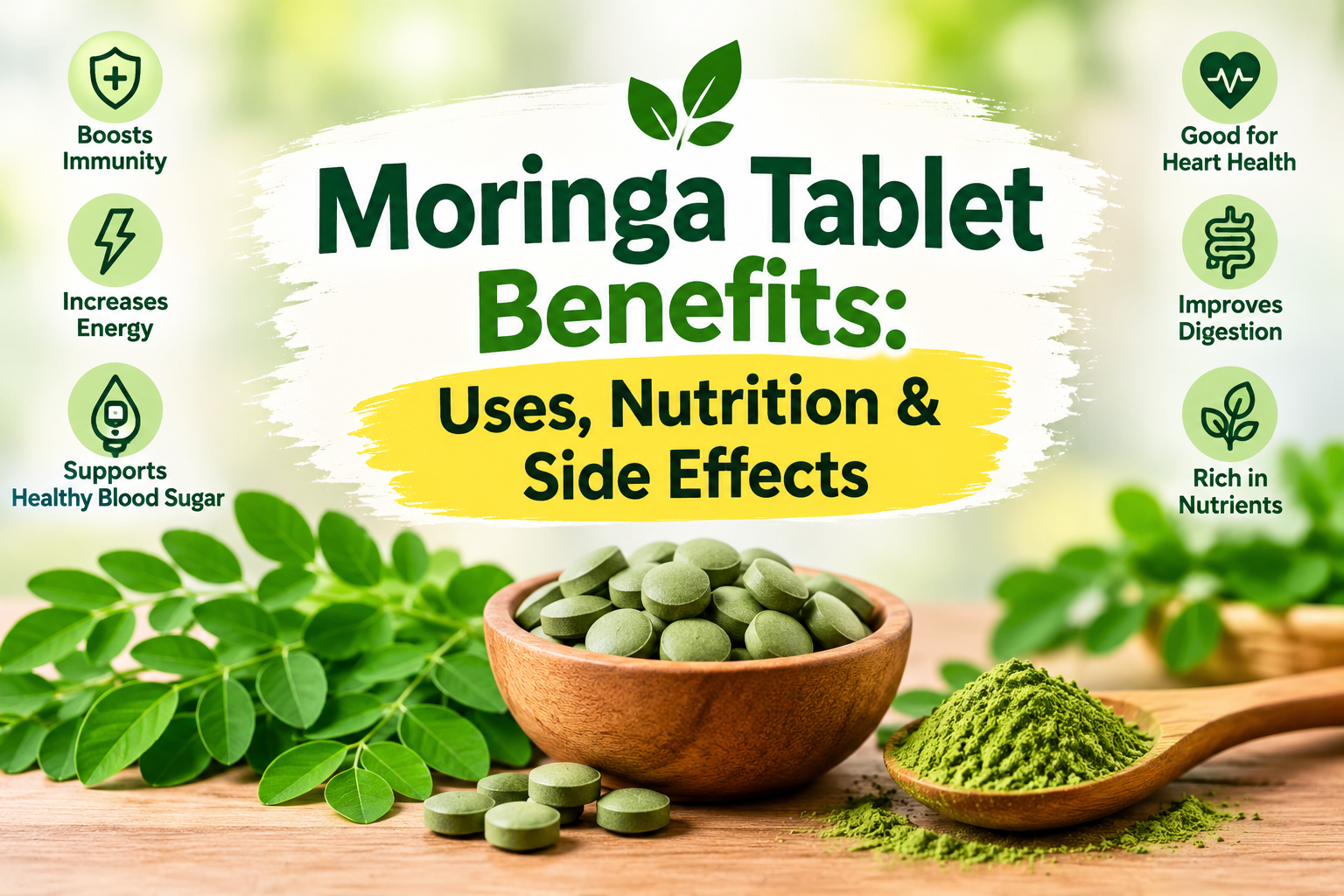
Moringa tablets have several advantages compared to powder form.
a) It provides an accurate dose of moringa powder or extract.
b) It can mask the bitter, unpleasant taste of moringa.
c) It is a convenient and easy-to-handle dosage form, whether at home or during travelling.
This article summarizes research studies on using the tablet form to manage conditions like subclinical hypothyroidism, oral submucous fibrosis, and thrombocytopenia.
Moringa Tablet Benefits: Clinical Trial Compares Powder, Tablets, and Standard Treatment for Oral Submucous Fibrosis
Oral submucous fibrosis is a chronic disease characterized by stiffened and scarred soft tissue of the mouth and throat.
The condition may be caused by chewing betel nuts, gutkha, pan masala, kharra, and sweet supari.
Its symptoms include burning sensation in the mouth cavity, difficulty opening the mouth, restricted tongue mobility, swallowing difficulty, and rigid mucosa.
The condition can be managed by antioxidants, anti-inflammatories, and antifibrotic agents such as corticosteroids.
The treatment is accompanied by cessation of tobacco and areca nut habits and the use of mouth-opening exercises.
Medicinal compounds and nutrients from herbal plants may play a role in the management of oral submucous fibrosis.
These plant-based compounds may have fewer side effects and may decrease side effects associated with conventional medications.
Therefore, researchers are currently exploring a plant-based medicine for the management of such conditions.
Moringa oleifera is rich in bioactive compounds and nutritionally beneficial compounds and hence may play a role in the management of oral submucous fibrosis.
Karemore et al. conducted a study to evaluate the effect of Moringa oleifera in the management of this disease.
For the study, researchers randomly selected 24 patients aged between 15 and 40.
They selected only those patients who were habitual consumers of gutkha and other commercial preparations and had oral mucosal fibrosis in stage I to stage III.
They used three moringa formulations that include moringa gel, moringa powder, and moringa tablets.
The control group received a standard treatment with a lycopene, zinc, and selenium combination capsule and corticosteroids gel for topical application for 30 days.
Experimental groups received distinct moringa formulations.
Group I (moringa tablet) consumed a standard antioxidant tablet in the morning along with a 1000 mg moringa tablet in the evening and moringa gel for topical application for 30 days.
Group II (moringa powder) consumed a standard antioxidant tablet in the morning along with moringa powder at a dose of two gm in the evening and moringa gel for topical application.
They examined patients throughout and after interventions.
From the evaluation of various parameters, it was observed that the moringa tablet and moringa powder groups showed a more beneficial effect than the control group.
The findings suggest that moringa may be applied as a supportive treatment in the management of oral submucous fibrosis.
Moringa Tablet Benefits for Thyroid Health: What a Clinical Study Reveals
Hypothyroidism is a condition characterized by inadequate production of thyroid hormone and consequently reduced thyroid gland function.
It is mainly caused by iodine deficiency.
It is very common in the age range between 20 and 45. Its symptoms include lethargy, weight gain, cold intolerance, and dry skin.
The condition can be managed by conventional medicine that improves iodine level and thyroid hormones.
Subclinical hypothyroidism is characterized by high TSH while the T4 level remains normal with few or no clinical manifestations.
Herbal medicines can be used to manage this condition, as these plants have nutrients and bioactive compounds.
These compounds may improve the altered thyroid function. The main advantage of herbal medicine is its cost-effectiveness, and it is readily available in remote areas.
Moringa is one such plant that can have potential in the management of hypothyroidism.
Shubham K. and Arun C. conducted a study to determine the effect of the moringa tablet in the management of subclinical hypothyroidism.
For the study, they randomly selected 30 volunteers of both sexes aged between 20 and 60 years who had no disease conditions and only had symptoms associated with subclinical hypothyroidism.
All the patients received a moringa tablet at a dose of 1 gm twice daily before meals for 42 days.
They assessed the thyroid profile and anthropometric changes, such as weight loss and hair loss throughout the study.
It was observed that the moringa tablet may reduce symptoms associated with subclinical hypothyroidism.
Thus, the findings suggest the potential role of the moringa tablet in the management of subclinical hypothyroidism.
Moringa Tablet Benefits in Thrombocytopenia: What Preclinical Research Reveals About Platelet Recovery
Thrombocytopenia is a disease characterized by a depleted platelet count below 150000 per microliter of blood that consequently leads to excessive bleeding due to an altered clotting process.
The condition arises due to inadequate platelet production or early destruction of platelets by the body.
Its common symptoms include excessive bruising, nosebleeds, the presence of blood in urine and stool, unusual menstrual periods, and reddish-purple dots on the skin.
The condition can be managed by the administration of standard medications such as steroids or immune globulin, donor platelet transfusion, and surgery.
Bhoomika Chandel et al. conducted a study to evaluate the effect of a polyherbal tablet that consists of Moringa oleifera and Carica papaya leaf extract in the management of thrombocytopenia.
For the study, they randomly selected 25 healthy Wistar rats and divided them into five groups.
Group I received 10 ml per kg body weight of saline solution.
Thrombocytopenia was induced in experimental groups by the administration of cyclophosphamide.
Experimental groups received standard medication and varied concentrations of herbal tablets.
Among these, group III received standard medication for 14 days.
Groups IV and V received herbal tablets in doses of 200 mg/kg and 300 mg/kg body weight, respectively, for 14 days.
Group II received no medication.
The examination of parameters such as bleeding time, clotting time, and platelet count revealed the efficacy of herbal tablets.
Thus, findings suggest that Moringa oleifera and Carica papaya can have a potential role in the management of thrombocytopenia.
References
1. Karemore T, Ambhore P, Motwani M. Evaluation of the efficacy of moringa leaf extract in the treatment of oral submucous fibrosis in comparison with the standard treatment protocol: A pilot study. Natl J Maxillofac Surg. 2026;17(2):248-55. doi:10.4103/njms.njms_61_25.Read More
2. Shubham K, Arun C. Effect of Shigru (Moringa oleifera Linn.) patra choorna tablet in the management of subclinical hypothyroidism – A single arm open labeled clinical trial. J Ayurveda Hol Med. 2025;13(3):2-15.
3. Chandel B, Sahu GK, Sharma H, Chaudhary M, Deshmukh J, Vishwakarma P, et al. Formulation, development and evaluation of a polyherbal tablet containing Moringa oleifera and Carica papaya leaf extracts for the management of thrombocytopenia. Int J Aquat Res Environ Stud. 2026;6(S5):964-78.
4. Gopalakrishnan L, Doriya K, Kumar DS. Moringa oleifera: A review on nutritive importance and its medicinal application. Food Sci Hum Wellness. 2016;5(2):49-56.
5. Sujatha BK, Patel P. Moringa oleifera – Nature’s Gold. Imperial J Interdiscip Res. 2017;3(5):1175-1179.
6. Liu R, Liu J, Huang Q, Liu S, Jiang Y. Moringa oleifera: a systematic review of its botany, traditional uses, phytochemistry, pharmacology and toxicity. J Pharm Pharmacol. 2022;74(3):296-320.
7. Oyeyinka AT, Oyeyinka SA. Moringa oleifera as a food fortificant: recent trends and prospects. J Saudi Soc Agric Sci. 2018;17(2):127-36. doi:10.1016/j.jssas.2016.02.002
8. Konmy BBS, Olounladé PA, Allou SD, Azando EVB, Hounzangbé-Adoté MS. A review on phytochemistry and pharmacology of Moringa oleifera leaves (Moringaceae). J Pharmacogn Phytochem. 2016;5(5):325-30.
FAQ
1.What nutrients in moringa specifically support endocrine function?
Moringa contains nutrients like zinc, selenium, iron, and vitamin A.
Each of these nutrients has a crucial role in thyroid function.
Zinc acts as a cofactor for enzymes in TRH and TSH synthesis, selenium acts as an antioxidant, and vitamin A is crucial in the regulation of thyroid hormone receptors.
Iron also acts as a cofactor in the synthesis and regulation of thyroid hormones.
2. Can moringa help alleviate hypothyroid-related fatigue?
Moringa has high bioavailable iron and vitamin C content, which support red blood cell production, cellular oxygen transport, and mitochondrial energy production.
However, it should be used with caution because it contains goitrogenic compounds.
3. How does moringa support metabolism and weight management in hypothyroid patients?
Hypothyroidism typically slows the basal metabolic rate.
Moringa contains chlorogenic acid and dietary fiber, which help regulate postprandial glucose spikes and improve insulin sensitivity.
4. Can moringa help with chronic hypothyroid constipation?
Dried moringa leaves are rich in soluble and insoluble fiber, which promotes gastrointestinal motility and helps relieve the sluggish digestion frequently seen in hypothyroid individuals.
5. Does moringa lower elevated cholesterol caused by hypothyroidism?
Low thyroid hormone downregulates hepatic LDL receptors, raising circulating cholesterol.
Moringa contains beta-sitosterol and bioactive polyphenols that have been shown to help lower serum LDL cholesterol and triglycerides.
6. Does moringa help with hypothyroid-related dry skin and brittle hair?
Moringa contains vitamins A, C, and E, alongside protein and amino acids, including methionine and cysteine.
These substances are essential for keratin production and skin barrier repair.
Therefore, moringa may have a role as a supplement in the management of dry skin and brittle hair related to hypothyroidism, but always use it with caution, as it may worsen the condition.
7. Can moringa cure hypothyroidism?
Moringa cannot cure hypothyroidism.
An underactive thyroid gland requires standard medicines management to restore hormone equilibrium.
Moringa acts strictly as a complementary dietary food, not a medical cure.
8. Does moringa affect the conversion of T4 to active T3?
Preclinical research studies suggest high-dose moringa leaf extract may suppress the peripheral 5′-deiodinase enzyme, reducing T4 to T3 conversion.
This mechanism is beneficial in hyperthyroid models.
However, it should be used with caution in people with an underactive thyroid.
9. How does moringa combat systemic oxidative stress in autoimmune thyroid disease?
The thyroid produces hydrogen peroxide during hormone synthesis.
Moringa contains polyphenols and assists endogenous enzymes (superoxide dismutase and catalase), helping neutralize free radicals and mitigate thyroid cellular damage.
10. Is moringa safe during pregnancy for women with hypothyroidism?
Pregnant women should avoid moringa supplements.
Moringa root, bark, and concentrated extracts possess documented abortifacient and uterine-stimulating properties.
11. Does moringa interact directly with levothyroxine (Synthroid, Eltroxin)?
Moringa is rich in calcium, iron, and dietary fibers, all of which bind to synthetic thyroxine in the gut lumen, significantly lowering drug bioavailability.
12. How many hours should I separate m
oringa from thyroid medications?
Take your thyroid medication on an empty stomach with plain water, and wait at least 3 to 4 hours before consuming moringa or moringa-fortified foods.
13. Can moringa be taken alongside selenium or zinc supplements?
Yes, but check total cumulative intake. Since moringa naturally provides zinc and selenium, pairing it with high-dose standalone supplements could cause you to exceed the established upper intake levels (e.g., 400 mcg/day for selenium).

Mr.Piyush D Sadar ,Mpharma B pharma ,Pharma Blog Writer
Medical Disclaimer: This article is for educational purposes only and should not replace professional medical advice. Always consult your obstetrician or healthcare provider before using moringa or any herbal supplement during pregnancy.
Read More :Moringa For Hair Growth