
Moringa and diabetes, As per the WHO, diabetes mellitus is one of the major metabolic disorders that is responsible for mortality and morbidity worldwide.
It may cause inadequate utilization of insulin by the body or inadequate production of insulin.
Conventional medicines are available to treat the disease.
A major drawback of these medicines is side effects alongside their beneficial effects.
Additionally, conventional interventions are costly and are inaccessible to people residing in rural areas.
Therefore, there is a need for alternative therapies with minimal or no side effects.
Ayurvedic medicines have health benefits with minimal side effects.
They are accessible to rural people and are less costly.
In recent years, extensive research has been conducted on herbal plants.
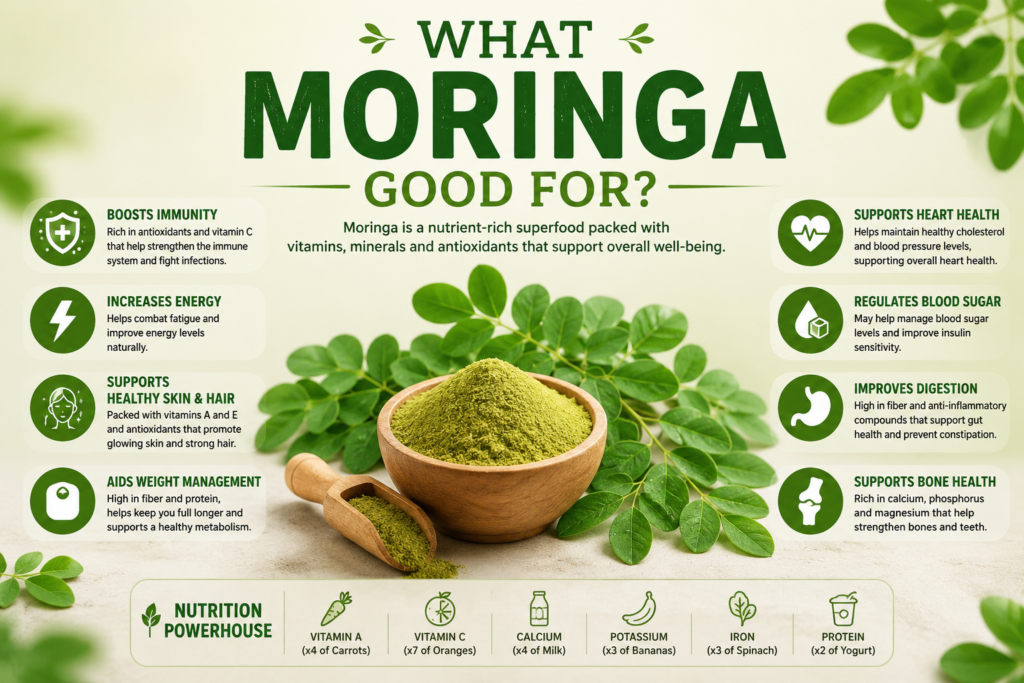
Moringa oleifera is one such herbal medicinal plant that is nutrient dense and rich in bioactive compounds such as flavonoids, glycosides, and alkaloids that have health benefits.
Since ancient times, Moringa oleifera plant parts have been used for the treatment of various ailments.
It is one of the most popular among the herbal remedies that have health and nutritional benefits.
Numerous preclinical and clinical research works have shown that this plant has the potential to treat diabetes mellitus.
It acts by controlling glucose levels, improving tissue sensitivity to insulin and blood lipid levels, and also preventing organ damage caused by diabetes mellitus.
Here we have summarized some of the research work and their findings that demonstrate the efficacy of Moringa oleifera in the management of diabetes mellitus. what is moringa ?
Is Moringa Good for Diabetics? What Current Research and Preclinical Trials Reveal
Tarique Anwer and colleagues conducted a study on the effect of Moringa oleifera leaf extract in the management of type 2 diabetes induced by streptozotocin in rats.
The researchers randomly selected 36 male Wistar rats and divided them into control and experimental groups.
Group 1 received normal saline. The experimental groups received a streptozotocin injection and varying concentrations of Moringa oleifera extract for 21 days after the induction of diabetes.
The analysis of biochemical and physiological parameters revealed that Moringa oleifera extract has a beneficial effect in the treatment of diabetes mellitus. moringa powder benefits
Moringa Leaf for Diabetes: What Current Scientific Research Actually Reveals
Lassana Sissoko and colleagues conducted a comparative study on the effect of Moringa oleifera leaf powder on diabetic and nondiabetic human volunteers.
The researchers randomly selected 70 human volunteers, among whom 35 are diabetic and 35 nondiabetics.
They observed fasting and non-fasting blood glucose levels of these volunteers.
All volunteers received moringa oleifera leaf powder 30 minutes after ingestion of food.
The determination of biochemical and physicochemical parameters reveals the efficacy of moringa.
Moringa powder has shown a significant decrease in blood sugar levels in diabetic patients, while non-diabetic blood glucose levels remain unchanged.
.
Moringa Leaf and Diabetes: What Clinical Research Reveals About Blood Sugar Control
Bienvenu Tollo and colleagues conducted a study on the effect of moringa leaf powder in diabetic and prediabetic volunteers.
They randomly selected 40 volunteers for the trial and divided them into two groups as a control and experimental group.
The diabetic experimental group received a diet added with a specified amount of moringa powder for about 3 months.
The control group received a regular diet without the addition of moringa powder.
They checked parameters such as blood glucose, LDL, triglycerides, HDL, and body weight.
The researchers observed that regular consumption of moringa powder in diet has a beneficial effect on a disease condition, including diabetes and hyperlipidemia.
Clinical Evidence on Moringa oleifera: Impact of Moringa for Diabetics
D. Jalaja kumari conducted a study on the effect of Moringa oleifera leaf powder and Azadirachta indica seed powder among individuals with type 2 diabetes mellitus.
The researcher randomly selected 55 patients with type 2 diabetes of both sexes.
The volunteers were divided into the control and experimental groups.
The experimental group received a specified amount of herbal powder of both drugs.
The determination of biochemical and physicochemical parameters revealed the efficacy of the drugs.
The findings suggest that both drugs may be useful for the management of type 2 diabetes mellitus.
Moringa Oleifera and Diabetes: What the Clinical Studies Show
Siska Sakti Angraini and colleagues conducted a clinical trial on the effect of Moringa oleifera decoction in human volunteers.
The experiment was based on a pretest-posttest model.
The researchers randomly selected 18 volunteers with preexisting type 2 diabetes mellitus for the study.
The control group did not receive moringa, while the experimental group received a specified amount of moringa decoction for 7 days.
The evaluation of biochemical and physicochemical parameters revealed the effectiveness of moringa decoction in the management of diabetes mellitus.
These findings suggest that moringa decoction may be beneficial as supportive treatment for type 2 diabetes
References:
1) Mthiyane FT, Dludla PV, Ziqubu K, Mthembu SXM, Muvhulawa N, Hlengwa N, et al. A review on the antidiabetic properties of Moringa oleifera extracts: focusing on oxidative stress and inflammation as main therapeutic targets. Front Pharmacol. 2022;13:940572.Read More
2) Omodanisi EI, Aboua GY, Oguntibeju OO. Therapeutic potentials and pharmacological properties of Moringa oleifera Lam in the treatment of diabetes mellitus and related complications. Trop J of Pharm Res. 2017;16 (7): 1737-1746.
3)Anwer T, Safhi MM, Makeen HA, Alshahrani S, Siddiqui R, Sivakumar RM, et al. Antidiabetic potential of Moringa oleifera Lam. leaf extract in type 2 diabetic rats, and its mechanism of action. Trop J of Pharm Res. 2021;20(1):95-103.
4) Sissoko L, Diarra N, Nientao I, Stuart B, Togola A, Diallo D, et al. Moringa oleifera leaf powder for type 2 diabetes: a pilot clinical trial. Afr J Tradit Complement Altern Med. 2020; 17(2): 29-36.
5) Tollo B, Chougourou DC, Todohoue CM. Anti-hyperglycaemic and lipid profile regulatory properties of Moringa oleifera in subjects at early stages of type 2 diabetes mellitus. EMJ Diabet. 2016;4(1):99-105.
6) Kumari DJ. Hypoglycaemic effect of Moringa oleifera and Azadirachta indica in type 2 diabetes mellitus. The Bioscan;5(2):P211–214.
7) Angraini SS, Ibrahim I, Jesica F, Hayu R. The effect of decoction of moringa leaves (Moringa
oleifera) on blood sugar levels in type 2 diabetes mellitus patients. Advances in Health Sciences Research. 2021;39:88-91.
8) https://www.who.int/news-room/fact-sheets/detail/diabetes
9. https://www.who.int/health-topics/diabetes#tab=tab_1
FAQ
1. What are the health benefits of consuming fresh leaves of Moringa (Moringa oleifera)?
Fresh moringa leaves are enriched with vitamins A, C, and B.
They are also enriched with minerals like calcium, potassium, iron, and magnesium.
Additionally, they possess bioactive compounds.
Therefore, consuming fresh moringa leaves may have both nutritional and medicinal benefits.
2. Is Moringa good for diabetes?
Bioactive compounds, such as isothiocyanates and chlorogenic acid, are present in moringa.
These compounds help reduce the blood glucose level by distinct mechanisms and may support the management of type 2 diabetes mellitus.
3. Can Moringa help prevent and control diabetes?
Numerous studies conducted in animals and a few studies conducted in humans indicate that moringa may help to prevent diabetes in normal individuals.
It can be used as supportive therapy in the management of type 2 diabetes mellitus.
4. What is the recommended daily dose of moringa for someone with diabetes?
It depends on a number of factors, such as metabolism, sex, age, and other pre-existing disease conditions.
There is a possibility of an allergic reaction in some individuals.
Therefore, begin consuming it with the lowest possible dose, or a half-tablespoon, and then increase slowly while monitoring benefits and side effects.
5. Are there any potential side effects of taking moringa while also using insulin for diabetes?
Yes, consuming moringa along with insulin administration may leads to hypoglycemic condition.
There may be chance of abrupt decrease in blood sugar levels below normal level.
6. Can individuals with chronic kidney disease or diabetes safely consume moringa?
Consuming moringa may cause adverse effects in patients with pre-existing kidney disease.
The kidneys are the primary excretory organs of the body.
Impaired kidney function can lead to an increase in the concentration of certain metabolites and chemical substances.
For example, moringa is rich in potassium, which is mainly excreted through the kidneys. Ultimately, the accumulation of potassium in the body may adversely affect the heart.
7. Are there any potential side effects of moringa on individuals with diabetes?
There is a risk of hypoglycemia, interactions between moringa and conventional medications, and gastrointestinal distress.
Therefore, always start by consuming a minimal amount and monitor the benefits and side effects.
Always consult a physician before consuming moringa on a regular basis.
8. What are the potential side effects of consuming high doses of moringa, particularly for individuals with hypertension or diabetes?
Consuming high doses of moringa can cause adverse side effects, particularly for individuals with hypertension or diabetes.
Moringa may interact with conventional medications and render them ineffective, or it can produce additive effects that lead to a dangerous, abrupt drop in blood pressure and blood sugar levels.
9. Is moringa effective for both Type 1 and Type 2 diabetes?
Moringa may help manage type 2 diabetes, where there is inadequate production of insulin or inadequate use of insulin for carbohydrate metabolism and other foods.
In type 1 diabetes, there is complete or very little insulin in the pancreas.
Scientific studies reveal moringa’s benefits in type 2 diabetes management.
Therefore, we can say that moringa may help manage only type 2 diabetes.
10. How does moringa work to lower blood sugar?
The bioactive compounds that are present in Moringa oleifera may help manage blood sugar by acting in different ways.
They may act by reducing oxidative stress, increasing the utilization of insulin, increasing insulin sensitivity, and reducing blood sugar levels.
11. How does quercetin in moringa help diabetics?
Quercetin is a potent antioxidant compound present in moringa.
It may prevent damage to cells by harmful free radicals.
Thereby, it plays a role in preventing and managing damage to pancreatic cells.
It may also play a role in proper utilization of insulin and reducing blood glucose levels.
12. What role does chlorogenic acid play in diabetes?
Chlorogenic acid may play a role in the management of diabetes by reducing blood sugar levels and glucose production in the liver by altering enzyme activities.
It may also reduce oxidative stress produced by free radicals.
13. Does moringa reduce cholesterol in diabetic patients?
Numerous animal model studies and fewer human studies indicate that moringa may reduce cholesterol in diabetic patients.
14. Can moringa help with diabetic neuropathy or nerve pain?
Data obtained from preclinical studies reveals that moringa may indirectly help with diabetic neuropathy or nerve pain.
It may reduce blood sugar levels and oxidative stress and therefore can indirectly combat against diabetic neuropathy and pain.
15. Does moringa support weight loss in diabetic individuals?
The high fiber content in moringa helps promote satiety, while its bioactive compounds may support weight management in diabetic individuals.
16. Which form of moringa is best for blood sugar control?
Although pure moringa powder may have a beneficial effect on diabetes, individuals can ingest it in distinct forms as per availability and other factors that affect its use.
In rural areas moringa plants may be found easily, so fresh moringa leaves can be consumed.
In urban areas, commercial products are accessible, so its powder can be utilized.
Some people do not like its taste and prefer to take it in capsules.
Older adults are unable to ingest tablets or capsules, so they prefer to ingest them as powder.
Adult persons can consume it in capsule, tablet, or powder form.
17. When is the best time to consume moringa for diabetes?
For the best results, consume moringa half an hour before your meal.
18. Can I cook moringa without losing its diabetic benefits?
Yes, it can be added to moderately hot soups, food preparations, or moderately hot water, which will not destroy the active compounds present in it.
19. How long should a diabetic take moringa to see results?
Generally, it may take about 6 to 8 weeks for beneficial results after initiating regular consumption of moringa.
20. Does moringa interact with prescription diabetes medications?
Yes, moringa may interact with prescription medications like metformin and insulin.
21. Which parts of the moringa tree should diabetic patients avoid?
Diabetics should not ingest moringa roots and bark, as they contain toxic compounds that may aggravate diabetic conditions.
However, the leaves, seeds, and pods are considered safe for people with diabetes.
22. How frequently should I test blood sugar when starting moringa?
You should monitor your blood sugar daily to evaluate the benefits and side effects of your chosen dose.
Once you determine an adequate dose, you can maintain it regularly as supportive treatment while checking your blood sugar at periodic intervals.

Mr.Piyush D Sadar ,Mpharma B pharma ,Pharma Blog Writer
Medical Disclaimer: This article is for educational purposes only and should not replace professional medical advice. Always consult your obstetrician or healthcare provider before using moringa or any herbal supplement during pregnancy.
Read More :Moringa For Hair Growth
.